How Can Website Design Influence Conversion Rates and User Engagement?
Your website is often the first impression a potential customer has of your business.
Is it making the right one?
Think about the last time you landed on a website that felt clunky, confusing, or just slow. You probably left within seconds -- and so do your visitors. Every one of those bounces is a potential customer walking out the door.
Here's the good news: the right design decisions can change all of that.
TL;DR: Your website design directly affects how many visitors turn into paying customers. A slow, confusing, or mobile-unfriendly site sends people straight to your competitors. Fixing the right things -- speed, layout, consistency, accessibility, and mobile experience -- can make a measurable difference in your bottom line. Not sure where to start? That's exactly what Your WP Guy is here for.
Pretty Is Nice. But Does It Work?
A beautiful website that nobody can navigate isn't a website -- it's a liability.
The most effective sites strike a balance between looking great and working smoothly. Clear menus, logical layouts, and easy-to-find information keep visitors on your page longer. And the longer they stay, the more likely they are to reach out, buy, or book.
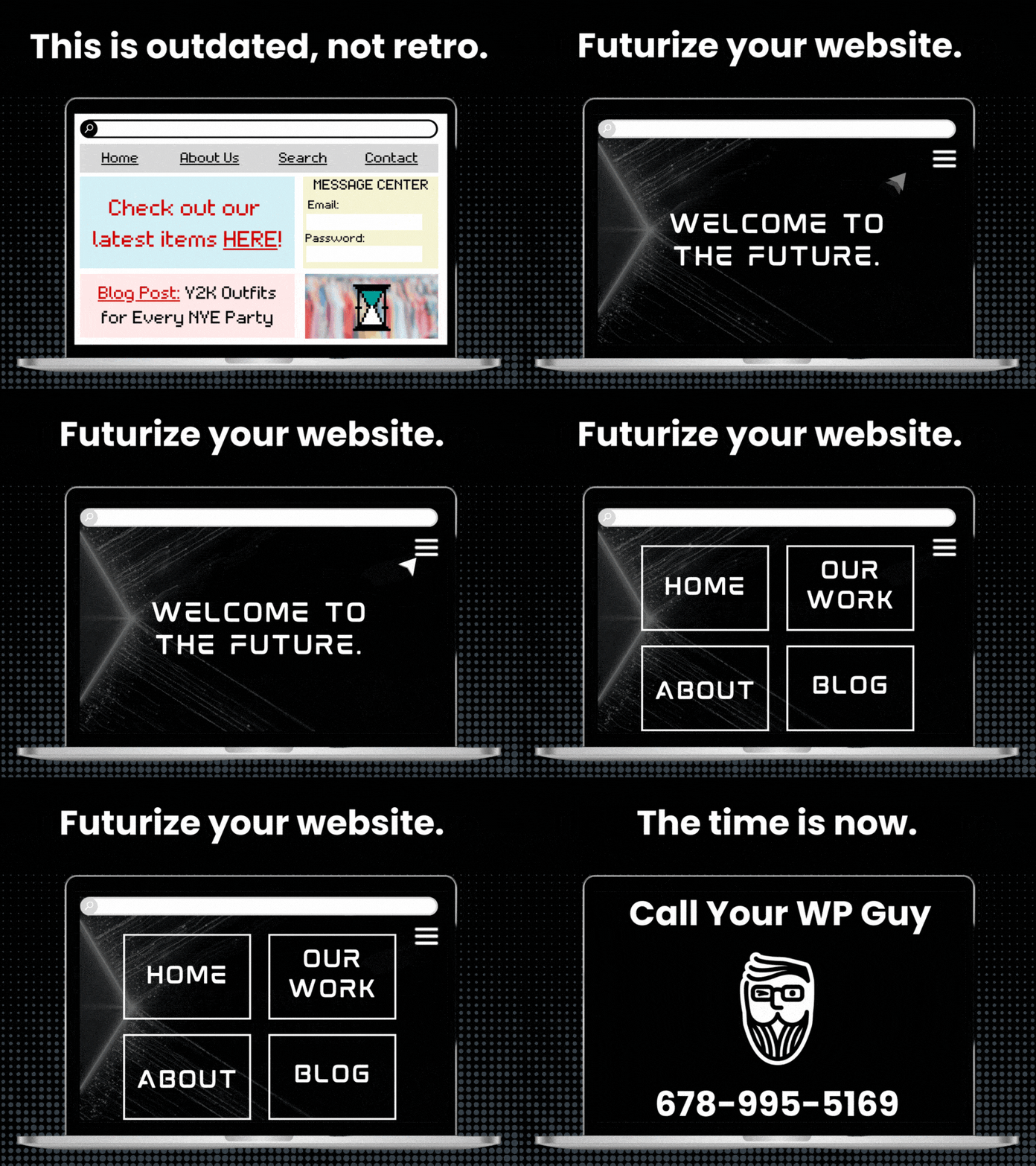
Here's a simple example: the hamburger menu. That three-line icon in the corner of a page hides your navigation links until a visitor needs them. It keeps the design clean without sacrificing usability -- especially on mobile. That's the kind of small detail that makes a big difference in how people experience your site.
Your Visitors Should Never Have to Think Too Hard
Here's a question worth asking: what does someone coming to your website actually need to find?
If the answer is your phone number, your hours, or how to buy your product -- those things need to be front and center. Not buried two clicks deep. Not hidden in a footer.
When a visitor has to hunt for basic information, they don't stick around. They go find a competitor whose site makes it easy.
Intuitive design isn't about trends or aesthetics. It's about understanding your customer's journey and removing every obstacle between them and the next step.
Consistency Builds Trust (Whether You Realize It or Not)
Have you ever landed on a website where every page looked like it belonged to a completely different company? It feels disorienting -- and it quietly chips away at trust.
Consistent typography, colors, button styles, and layouts across your entire site do something powerful. They signal to your visitors that your business is professional, reliable, and put-together. That impression happens fast, and it matters.
Your font choices carry more weight than you might think. Serif fonts tend to feel established and trustworthy. Sans-serif fonts feel modern and clean. Whatever you choose, sticking to two or three fonts throughout your site keeps things cohesive and easy to read.
Your color palette works the same way. A consistent color scheme tied to your brand creates familiarity. It also subtly guides visitors through your site, since certain colors naturally draw the eye toward action.
Accessibility Isn't Optional -- It's Good Business
Accessible design isn't just the right thing to do. It's also a smart business decision.
When your site works well for everyone -- including people with visual impairments, hearing loss, or physical limitations -- you open your doors to more potential customers. And you signal that your brand actually cares about people.
A few simple wins: add alt text to your images (it helps screen readers and boosts your SEO), make sure your site can be navigated by keyboard alone, use sufficient color contrast so your text is readable, and add captions or transcripts to any video or audio content.
These aren't complicated changes. But they can have a meaningful impact on who can actually use your site and how Google ranks it.
Slow Sites Lose Business. Period.
Patience isn't something most internet users have these days.
A one-second delay in page load time can reduce your conversions by 7%. Most visitors will abandon a site that takes longer than four seconds to load. If your site is slow, people are leaving before they ever read a single word you wrote.
The fix? Compress your images, use browser caching, and reduce the number of HTTP requests your site makes on load. These are technical optimizations that make a real, measurable difference -- and they're exactly the kind of thing a good WordPress maintenance partner handles for you so you don't have to think about it.
Most of Your Visitors Are on Their Phones
If your website isn't built for mobile, you're losing business every single day.
More than half of all web traffic now comes from smartphones. A responsive design automatically adjusts your site to look and work great on any screen size. But responsive alone isn't enough -- the details matter too.
Buttons need to be large enough to tap comfortably. Text needs to be readable without zooming in. Pop-ups that work fine on a desktop can completely block the screen on a phone, which drives visitors away fast.
Mobile-friendly design isn't a luxury. It's the baseline your customers expect.
Your Website Should Be Working for Your Business -- Not Against It
Here's the bottom line: your website design isn't just about how things look. It's about how well it serves your visitors and converts them into customers.
Every design decision -- your layout, your speed, your mobile experience, your accessibility -- either helps a visitor take the next step or gives them a reason to leave.
You shouldn't have to become a web design expert to get this right. That's what we're here for.
At Your WP Guy, we handle the website stuff so you can stay focused on running your business. From design improvements to performance optimization, we make sure your site is fast, functional, and working for you around the clock.
Ready to see what your website could be doing better? Schedule a free discovery call today and let's take a look.