What Is Responsive Design? Everything You Need to Know
Globally, there are more than 5.07 billion people using the internet. That's an enormous potential audience for your business.
If you want to succeed online, a strong web presence is essential. Building a good website involves many elements, and one of the most critical is responsive web design. It makes your website more usable, ensures people have a positive experience, and helps you retain customers instead of losing them to competitors.
TLDR: Responsive web design makes your website automatically adapt to different devices and screen sizes - computers, tablets, and smartphones. It uses flexible layouts, grids, images, and CSS media queries to display properly everywhere. With 59.6% of internet traffic coming from mobile devices, responsive design is essential for attracting audiences, improving SEO, lowering bounce rates, and increasing conversions.
So what is responsive design, and why does your business need it? Let's explore.

What Is Responsive Design?
Responsive web design involves building a website that responds to its environment and how users interact with it. This includes the platform, screen size, and device orientation.
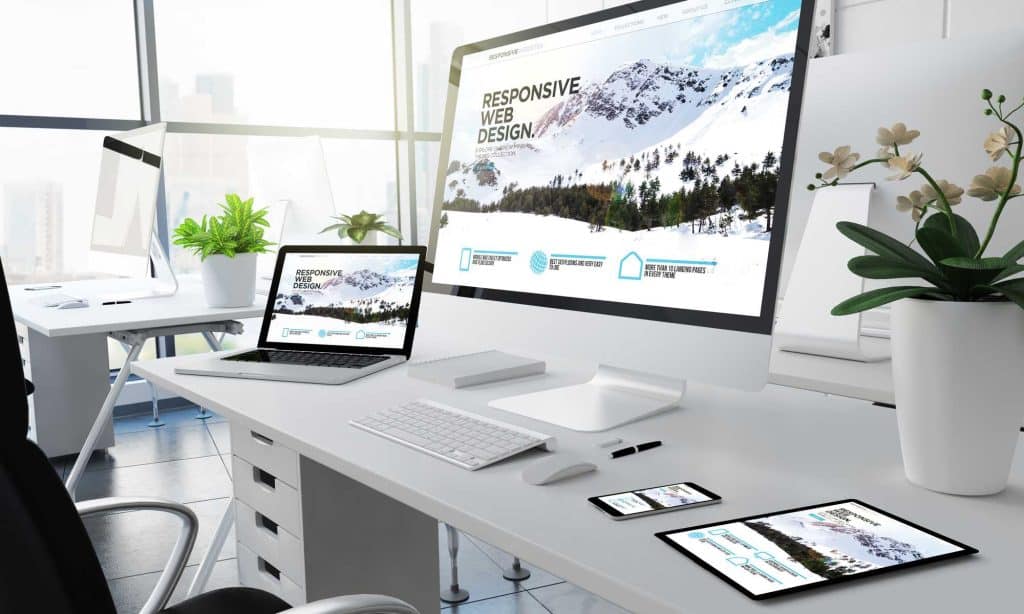
The result of good responsive design is a website that adapts seamlessly so it appears optimized on computers, tablets, and smartphones. Content, images, and navigation adjust automatically to ensure everything looks professional and functions properly, regardless of the device being used.
Without responsive design, your website might look perfect on a desktop computer but appear broken, cluttered, or unusable on a smartphone. The alternative would be creating separate websites for different devices, but that's inefficient, expensive, and difficult to maintain.
How Does Responsive Web Design Work?
Responsive web design uses flexible layouts and grids, responsive images, and CSS (cascading style sheets) media queries. These technical elements work together to tell your website how it should display itself based on the device being used and how the user is interacting with it.
When someone visits your site on a smartphone, the responsive design automatically adjusts the layout, scales images appropriately, and reformats navigation to work on a smaller touchscreen. When that same person visits on a desktop, the site expands to take advantage of the larger screen.
This happens automatically, providing an optimal experience regardless of how someone accesses your site.
Why Is Responsive Design Critical?
The internet has transformed dramatically in a short time. Not long ago, the only way to access the internet was through a desktop computer. At that time, all websites were basic and designed for one standard screen size.
Over the years, technology has advanced rapidly. We've seen the introduction of laptops with various screen sizes, tablets, and smartphones - all of which are now primary devices for web browsing.
It became clear quickly that traditional fixed-width websites didn't work well on smaller devices. Many companies initially created separate mobile websites, but this wasn't an ideal solution. It meant maintaining multiple sites, tracking separate analytics, and dealing with duplicate content issues.
With the introduction of responsive design, companies can now have one website that displays properly on whatever device someone uses. This is more efficient, cost-effective, and provides a better user experience.
Is Your Website Responsive?
It's easy to test if your website is already responsive. You can do this directly from your web browser.
Here's how to check in Google Chrome:
- Open Google Chrome
- Navigate to your website
- Press Ctrl + Shift + I (opens Developer Tools)
- Press Ctrl + Shift + M (toggles device toolbar)
You can now select different devices at the top of the screen and see exactly how your website displays on those devices. You can test any website this way if you want to see examples of responsive design in action.
If your site doesn't adapt properly to different screen sizes, you have a responsiveness problem that needs fixing.

The Powerful Benefits of Responsive Web Design
Almost all modern websites are built to be responsive because it provides several critical advantages. Making your site responsive should be a priority if it isn't already.
Attract a Wider Audience
The way people use the internet has changed dramatically. We're now at a point where people use their phones and other mobile devices to access the internet more than desktop computers.
59.6% of all internet traffic comes from mobile devices. If your website doesn't work well on mobile, you're potentially losing more than half of your potential audience.
Ensuring your site functions properly on all different types of devices maximizes the size of your potential audience and ensures you're not leaving money on the table.
Simpler Analytics and Tracking
If you create separate websites for different devices, you need to track analytics from multiple properties. This complicates your reporting and makes it harder to understand your overall performance.
Maintaining just one responsive website means you only need to track metrics in one place. This keeps things simpler and gives you a clearer picture of how your site is performing.
Easier Maintenance and Updates
Having multiple websites means more maintenance work. If you need to make changes or updates, you have to implement them in multiple locations. This doubles or triples your workload.
With one responsive website, updates happen once and apply everywhere. This saves significant time and reduces the risk of inconsistencies between versions.
Better SEO and Search Rankings
SEO (search engine optimization) is crucial for bringing organic traffic to your website. Google uses numerous factors to determine how high websites rank in search results.
Responsiveness has become a critical ranking factor. Google explicitly prioritizes mobile-friendly websites in search results. Having a responsive site helps you rank higher than competitors with non-responsive sites.
This directly translates to more visibility, more traffic, and more customers finding you.
Consistent Design and Branding
Your branding should be consistent across all elements of your business. Responsive design ensures your website adapts to different devices while maintaining the same professional appearance, branding, and overall feel.
This consistency builds trust and recognition. Customers should have the same brand experience whether they visit on their phone during lunch or on their computer at home.
Lower Bounce Rates
A poor user experience dramatically increases bounce rates - when visitors leave your site immediately without engaging.
Several factors contribute to bad user experiences: slow load speeds, functional issues, complex navigation, and lack of responsiveness. If people land on your site and it doesn't work properly on their device, they'll leave immediately and turn to one of your competitors.
You rarely get a second chance to make a first impression. Your site needs to function smoothly and correctly from the moment someone arrives.
Higher Conversion Rates
Conversely, a site that provides an excellent user experience leads to more conversions. If your site is easy to use, intuitive, and functions exactly how people expect, they'll enjoy using it.
This generates more sales, more email signups, more contact form submissions - whatever your conversion goals are. It also improves people's overall opinion of your brand, leading to repeat customers and positive word-of-mouth.
Why Responsive Design Matters for Your Small Business
Responsive design is absolutely essential for any small business looking to optimize its online presence and compete effectively.
With today's users constantly on the go and accessing websites from various devices throughout the day, having a website that scales properly to different devices and screen sizes is non-negotiable for maximum visibility and engagement.
Responsive design makes your web pages much easier to navigate regardless of device. It increases user satisfaction by providing a consistent, high-quality experience whether someone visits on their phone, tablet, or computer.
Improved user experience leads to increased brand loyalty. The more satisfied customers are with their interactions with your website, the more likely they are to return, make purchases, and recommend you to others.
For small businesses competing against larger companies with bigger budgets, responsive design levels the playing field. A small business with a responsive, well-designed website will outperform a large company with an outdated, non-responsive site every time.
Making Sure Your Website Is Responsive
If your website doesn't work well on mobile devices, you're losing sales and profits every single day. In today's mobile-first world, this isn't just a nice-to-have feature - it's essential for survival.
If you're uncertain whether your website is truly responsive or if it needs improvements, we can help.
We Specialize in Responsive WordPress Design
Your WP Guy specializes in all aspects of WordPress web design, including creating fully responsive websites that work beautifully on every device.
We can evaluate your current site, identify responsiveness issues, and implement solutions that ensure your website provides an excellent experience regardless of how customers access it.
We also handle ongoing maintenance to ensure your site continues performing flawlessly as technology evolves and new devices enter the market.
Your website is often the first impression potential customers have of your business. Make sure that impression is professional, polished, and positive on every device.
Ready to ensure your website is fully responsive and optimized for all devices? Click here to schedule an appointment today. We'll show you exactly how we can improve your website and help you capture the customers you're currently losing to poor mobile experience.
Don't let an unresponsive website cost you sales. Let us help you create a site that works perfectly everywhere.